Introduction
Failure Mode and Effect Analysis (FMEA) is a proactive and systematic methodology used to identify and evaluate potential failures in systems, products, or processes. By identifying failure modes early in the design or operational phase, FMEA helps organizations to mitigate risks, improve reliability, and ensure safety. Initially developed by the aerospace industry in the 1940s, FMEA is now widely applied across various sectors, including manufacturing, healthcare, automotive, and facilities management.
What is FMEA?
FMEA involves evaluating each component of a system or process to determine how it could fail, the potential consequences of those failures, and the likelihood of their occurrence. The objective is to prioritize these failures based on their severity, frequency, and detectability, allowing organizations to focus on the most critical risks and implement corrective measures accordingly.
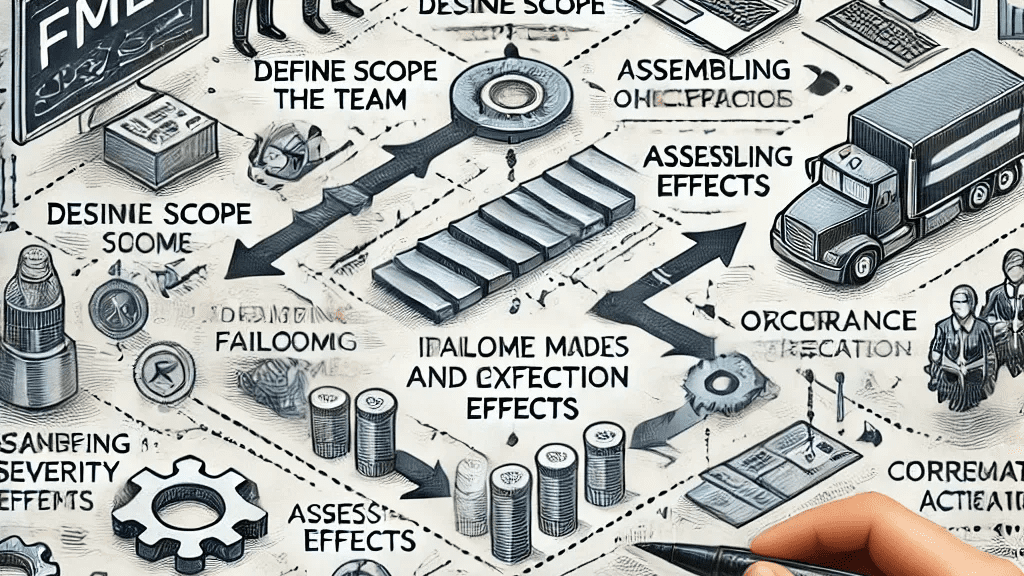
Steps Involved in the FMEA Process
- Define the Scope The first step in FMEA is defining the scope of the analysis. This involves selecting the system, product, or process to be analyzed and determining the boundaries of the analysis. Defining the scope ensures that the analysis remains focused and relevant to the desired outcomes.
- Assemble the FMEA Team A successful FMEA requires a multidisciplinary team that brings diverse expertise to the table. Typically, the team consists of members from design, operations, quality control, maintenance, and subject matter experts. Each team member’s input ensures that all potential failure modes are identified, and their effects are thoroughly evaluated.
- Identify Failure Modes A failure mode is any defect, malfunction, or issue that could prevent the system or product from functioning as intended. The team brainstorms and lists all potential failure modes for each component or step in the process. This step is crucial to ensure that no possible failure is overlooked.
- Assess the Effects of Failures Once failure modes are identified, the next step is to assess their effects on the system or process. This involves considering both immediate and downstream impacts. The severity of the effects is classified into categories such as:
- Assign Severity, Occurrence, and Detection Ratings FMEA uses three key factors to assess and prioritize failure modes:
- Calculate the Risk Priority Number (RPN) The Risk Priority Number (RPN) is a critical metric used to prioritize failure modes. The RPN is calculated by multiplying the severity, occurrence, and detection ratings (RPN = S × O × D). The higher the RPN, the more critical the failure mode is, indicating that corrective action should be prioritized.
- Prioritize and Implement Corrective Actions Once the RPNs are calculated, the failure modes with the highest RPNs are addressed first. Corrective actions may include redesigning components, improving maintenance schedules, or enhancing quality control processes. The goal is to eliminate or reduce the most significant risks to the system or process.
- Monitor and Review After corrective actions are implemented, continuous monitoring is essential to assess their effectiveness. If the corrective actions fail to reduce the risks as expected, additional measures may be required. FMEA is not a one-time exercise; it must be updated regularly, especially when there are changes to the system or new failure modes emerge.
Types of FMEA
Different types of FMEA are used depending on the stage of development or the specific focus of the analysis:
- Design FMEA (DFMEA): Focuses on identifying potential failure modes during the design phase of a product or system.
- Process FMEA (PFMEA): Focuses on identifying potential failure modes in the manufacturing or operational process.
- System FMEA (SFMEA): A broader approach that evaluates all components and interactions of a system.
- Maintenance FMEA (MFMEA): Focuses on identifying failure modes in equipment and facilities management, aiming to prevent breakdowns and optimize maintenance strategies.
Benefits of FMEA
FMEA offers numerous advantages, including:
- Proactive Problem-Solving: By identifying potential failure modes early, FMEA helps prevent costly disruptions and delays.
- Improved Safety: In industries where safety is paramount, FMEA helps identify risks that could lead to hazardous situations, allowing for mitigation before accidents occur.
- Enhanced Reliability: FMEA improves the overall reliability of systems by addressing weaknesses and vulnerabilities before they become issues.
- Cost Reduction: Preventing failures or minimizing their effects can significantly reduce repair costs, downtime, and lost productivity.
- Data-Driven Decision Making: FMEA provides a quantitative, structured method for making decisions about where to focus resources and corrective actions.
Challenges of FMEA
While FMEA is highly effective, it is not without challenges. Some of the common difficulties organizations face when implementing FMEA include:
- Complexity: Large systems or processes can involve numerous components, making it challenging to identify and analyze every potential failure mode.
- Subjectivity in Scoring: FMEA relies on team members to assign severity, occurrence, and detection ratings, which can introduce some level of subjectivity based on personal experience.
- Time-Consuming: The process of identifying failure modes, calculating RPNs, and implementing corrective actions can be time-intensive, especially for complex systems.
- Evolving Conditions: As systems change or new technologies emerge, failure modes can shift, requiring frequent updates to the FMEA.
FMEA in Facilities Management
In facilities management, FMEA is a powerful tool for ensuring the reliability and safety of building systems and infrastructure. For example, in managing HVAC systems, lighting, or fire safety systems, FMEA helps identify potential failures, evaluate their consequences, and implement preventive maintenance schedules. This proactive approach minimizes downtime and reduces the risk of service interruptions or safety hazards in the facility.
Conclusion
Failure Mode and Effect Analysis (FMEA) is a valuable tool for identifying, evaluating, and mitigating risks in various industries, including facilities management. By systematically identifying failure modes, assessing their effects, and implementing corrective actions, FMEA ensures that systems, products, and processes are reliable, safe, and efficient. Although the process can be time-consuming and complex, the benefits far outweigh the challenges, making FMEA an essential part of any risk management strategy. By integrating FMEA into routine operations and continually updating it as systems evolve, organizations can improve their overall performance and reduce the likelihood of costly failures.