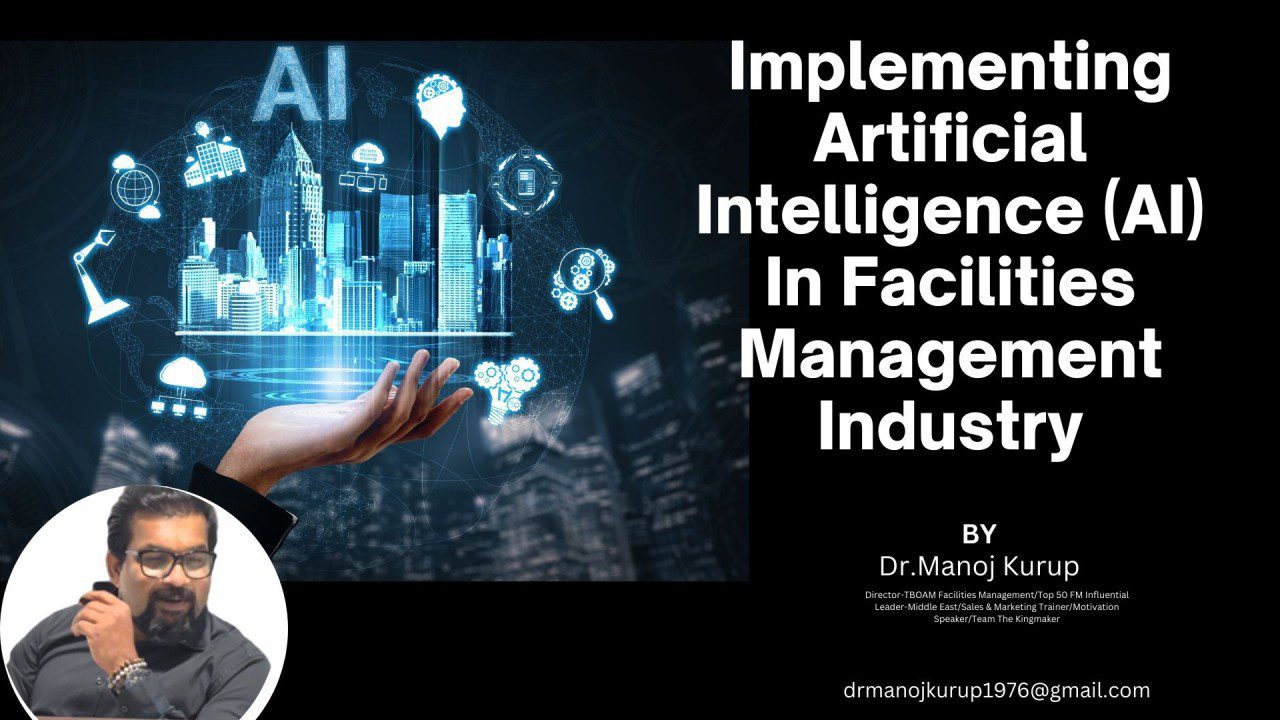
Implementing Artificial Intelligence (AI) in the Facilities Management industry can bring numerous benefits, including increased efficiency, cost savings, predictive maintenance, and improved customer experiences. Here are the steps to effectively implement AI in Facilities Management:
- Define Objectives and Use Cases: Start by clearly defining your organization’s objectives and the specific areas where AI can make a significant impact. Common AI use cases in Facilities Management include predictive maintenance, energy optimization, space utilization, and intelligent asset management.
- Data Collection and Integration: AI relies heavily on data, so ensure you have access to relevant and high-quality data. Collect data from various sources, such as sensors, building management systems, maintenance records, and historical data related to equipment and processes. Integrate and organize this data to make it accessible for AI algorithms.
- Data Quality and Preprocessing: Data quality is crucial for accurate AI models. Clean, preprocess, and normalize the data to remove inconsistencies, outliers, and errors. Ensure that the data used for training models is representative of real-world scenarios.
- Selecting AI Techniques: Depending on the specific use cases, you might use various AI techniques such as Machine Learning (ML), Deep Learning, Natural Language Processing (NLP), or Computer Vision. Each technique has its strengths, so choose the one that best suits the problem you are trying to solve.
- Developing AI Models: Train AI models using the preprocessed data. For example:
- For predictive maintenance, use historical equipment data to predict failure probabilities.
- For energy optimization, implement algorithms to optimize heating, cooling, and lighting based on occupancy patterns and weather forecasts.
- For space utilization, use occupancy data to optimize space allocation and room booking systems.
- AI Implementation: Integrate AI models into your existing Facilities Management systems. This may involve working closely with the IT department to ensure seamless integration.
- Continuous Monitoring and Improvement: AI models should be continuously monitored to ensure they perform as expected. As data changes over time, retrain the models periodically to maintain their accuracy and relevance.
- Security and Privacy: AI implementation introduces new data security and privacy challenges. Ensure that data access and usage comply with industry regulations and best practices.
- Employee Training and Adoption: Train your Facilities Management staff to work effectively with AI systems. Encourage employees to embrace AI as a tool that enhances their productivity and decision-making abilities.
- Start Small and Scale: Begin with a pilot project or a limited deployment to test the effectiveness of AI solutions. Once you have proven the concept and achieved positive results, gradually expand the AI implementation across the organization.
- Vendor and Partner Selection: Depending on your organization’s resources and expertise, you may choose to collaborate with AI vendors or partner with specialized AI companies to accelerate the implementation process.
Remember that successful AI implementation requires a strategic approach, collaboration across various departments, and a willingness to adapt and learn from the insights provided by AI models.